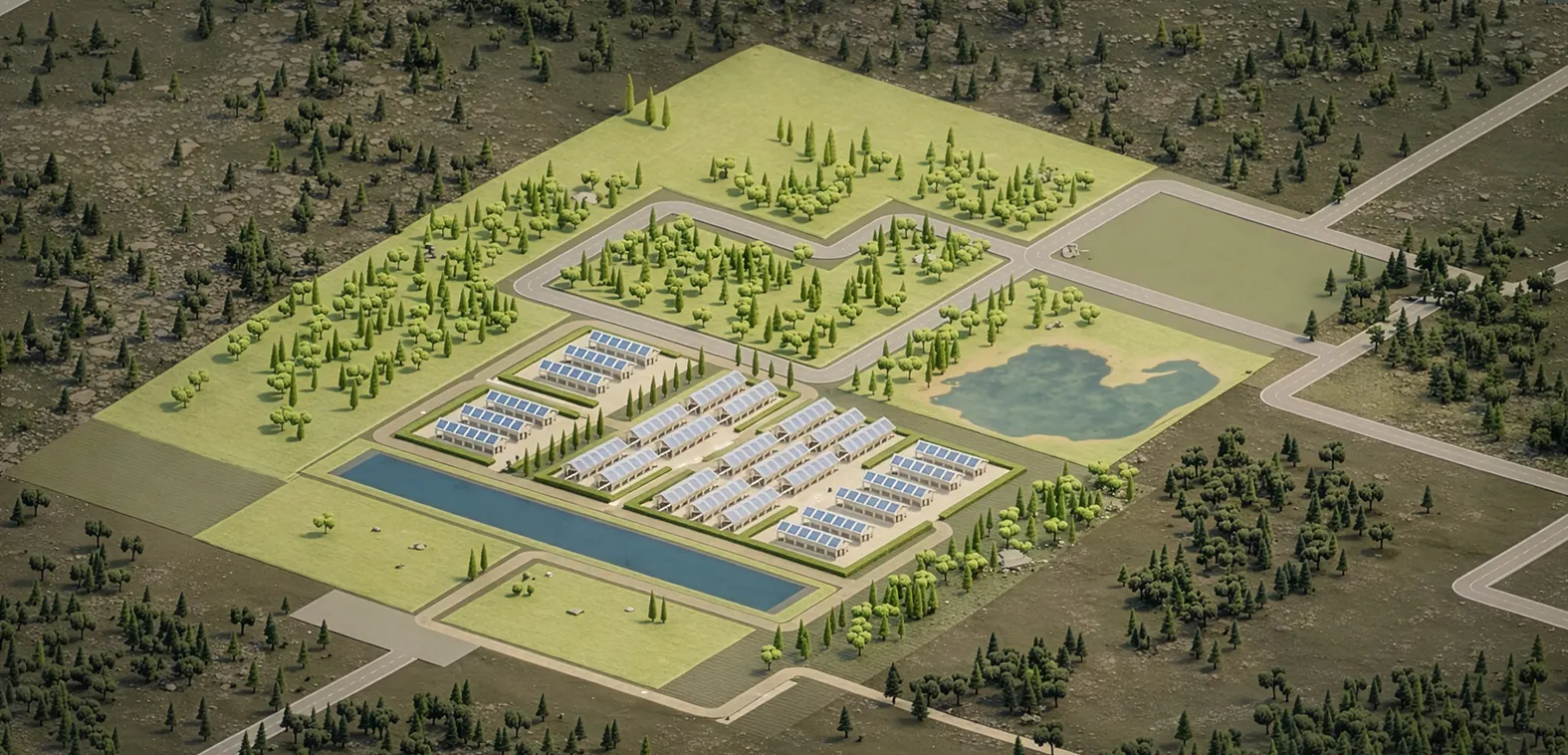
We transform unused land into multifunctional locations, reduce import dependencies, strengthen regional added value and provide solutions for a resilient, climate-independent and digital future. With HEAP Greenhouse Tech, we develop, operate and standardize integrated systems that combine three core areas:


water
.png)
Independent, decentralized water supply protects against bottlenecks and increases resilience in times of crisis. By using modern reverse osmosis systems, water is reliably treated and adapted to the specific requirements of the respective region. In this way, the water supply can be permanently secured and flexibly controlled.
.png)
Reduction of energy consumption and CO₂ emissions: Short distances, no external transport losses — water is extracted, treated and reused directly on site. With the help of drip irrigation systems, water consumption can be reduced by up to 90%, as every plant is supplied precisely and without loss. In addition, the climate in the greenhouse (e.g. humidity) is precisely tailored to the respective crop, making optimal use of resources.
.png)
Assured water availability enables year-round cultivation and strengthens local food production. The water is treated on a country-specific basis and is tailored to the crops in the respective region. In this way, farms can produce sustainably and competitively — regardless of global supply chains and climate uncertainties.

farming
.png)
State-of-the-art greenhouse technologies produce high-quality fruit and vegetables even on unfavorable climates — locally, year-round and efficiently. In addition, the entire value chain is considered: from resource-saving packaging to efficient logistics and regional sales, which reduces waste and closes cycles.
.png)
Optimized growing conditions make it possible to grow plants that would otherwise not thrive in the region. The products go through a sustainable supply chain — from climate-neutral packaging concepts to regional distribution. This reduces dependence on imports, strengthens food sovereignty and at the same time minimizes transport emissions.
.png)
Assured water availability enables year-round cultivation and strengthens local food production. The water is treated on a country-specific basis and is tailored to the crops in the respective region. In this way, farms can produce sustainably and competitively — regardless of global supply chains and climate uncertainties.
.png)
A stable indoor temperature of between 15 and 35 degrees Celsius and precisely controlled humidity of 50 to 98% make it possible to grow demanding plant species such as avocado, tropical fruits, strawberries, blueberries or lettuce — regardless of external conditions. Through integration into the entire value chain — from cultivation to resource-efficient packaging to regional marketing — maximum sustainability and quality assurance are achieved.

and quality assurance
solar energy
.png)
Solar energy is generated directly on site — this makes the energy supply resilient and regional.
.png)
The electricity generated is fed into the grid or used locally — income finances the operation of the greenhouses and makes the system economically viable.
.png)
The roofs of the greenhouses generate solar power while high-quality food is grown underneath — maximum efficiency without additional land consumption.

or supply to the network. takings
secure operation and self-financing

.png)
.png)
.png)


.png)
.png)
.png)
.png)
.png)