
Products

Scroll down
HEAP Greenhouse Tech

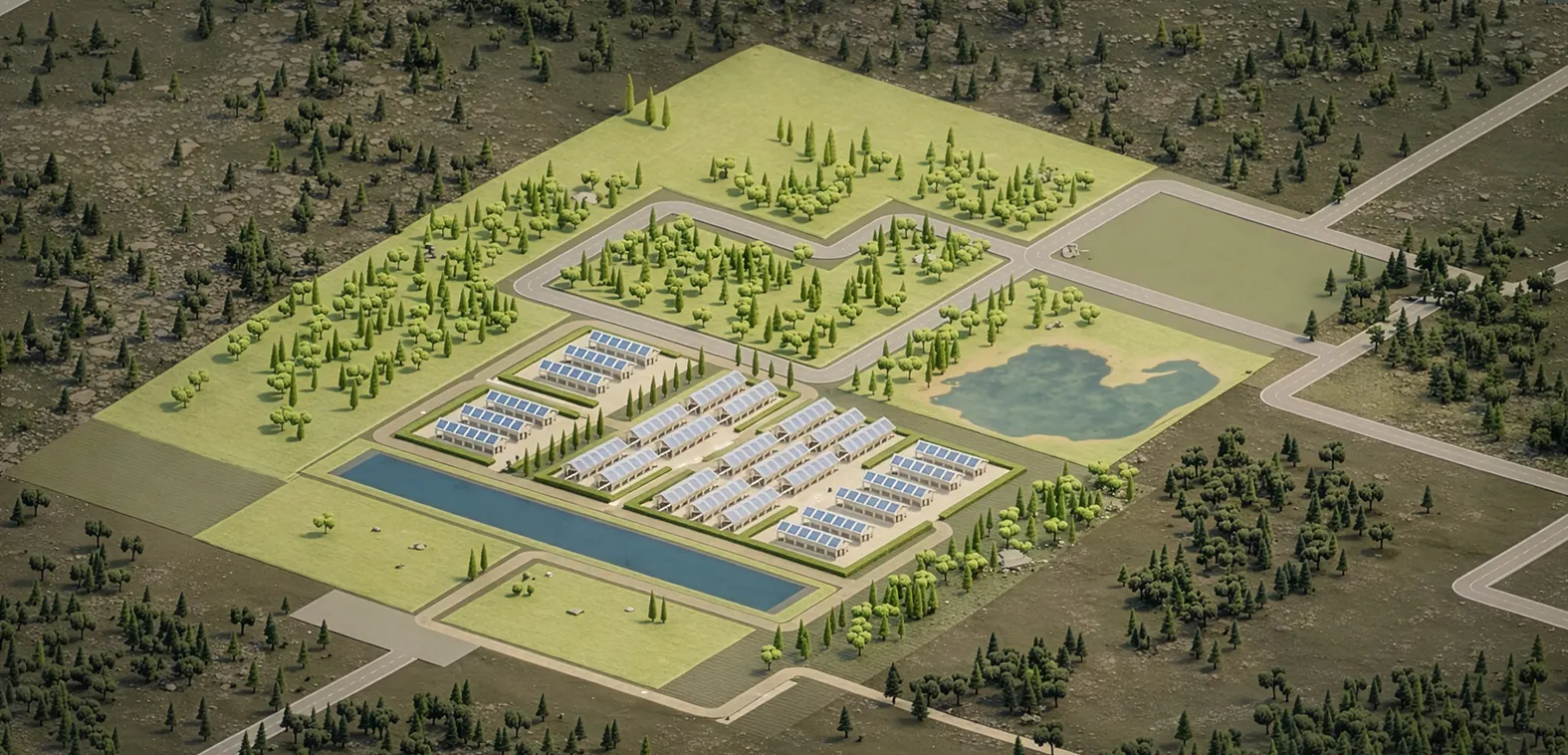
We transform unused land into multifunctional sites, reduce import dependencies, strengthen regional value creation and deliver solutions for a resilient, climate-independent and digital future. With HEAP Greenhouse Tech we develop, operate and standardize integrated systems that connect three core areas:

Visualization of an integrated HEAP site

Water

Efficient water treatment, storage and distribution

Agriculture

Year-round, sustainable food production in energy-efficient greenhouses

Solar Energy

Scalable energy supply

Products

Water

Value Chain Water

Local security of supply

Independent, decentralized water supply protects against shortages and increases resilience in times of crisis. With modern reverse osmosis systems, water is treated reliably and adapted to the specific requirements of each region. This secures long-term supply and makes it flexible to manage.

Resource efficiency & sustainability

Reduced energy consumption and CO₂ emissions: short routes, no external transport losses – water is sourced, treated and reused directly on site. Drip irrigation systems can reduce water consumption by up to 90 percent because every plant is supplied precisely and with minimal loss. In addition, the greenhouse climate is tuned exactly to each crop so resources are used optimally.

Support for regional agriculture

Reliable water availability enables year-round cultivation and strengthens local food production. Water treatment is adapted country by country and aligned with the crops of each region. This allows farms to produce sustainably and competitively, independent of global supply chains and climate uncertainty.

Value Chain Water

Water Value Chain

Sourcing:

local water sources, independent supply

Treatment:

reverse osmosis, country-specific adaptation, quality assurance

Optimization:

enrichment with the right minerals for consumption and/or irrigation use

Use & distribution:

drip irrigation and ideal preparation of the water for the plants

Agriculture

Value Chain Agriculture

Productive use of previously unusable land

Modern greenhouse technologies enable high-quality fruit and vegetables to be produced locally, efficiently and year-round even on climatically challenging terrain. At the same time, the value chain from resource-saving packaging to regional distribution is considered, reducing waste and closing loops.

Independence from global supply chains

Optimized growing conditions make it possible to cultivate crops that would otherwise not thrive in the region. Combined with sustainable packaging and regional distribution, this reduces import dependence while strengthening food sovereignty and supply security.

Creation of regional jobs & prospects

Year-round cultivation creates reliable prospects for farms, skilled workers and regional markets. This supports sustainable jobs and competitive local structures that can operate more independently from global supply chains and climate uncertainty.

Greenhouse climate optimization through IT infrastructure

A stable interior temperature and precisely controlled humidity make it possible to grow demanding crops regardless of external conditions. Combined with IT-based control, this creates predictable quality, high resource efficiency and a reliably manageable production environment.

Value Chain Agriculture

Agriculture Value Chain

Land use & cultivation:

development of previously unused land, climate-optimized greenhouses

Production & harvest:

resource-efficient cultivation, year-round production, high yield

Processing & packaging:

sustainable processing, climate-neutral packaging and quality assurance

Distribution & marketing:

secured off-take, short routes, local markets and job creation

Solar Energy

Value Chain Solar Energy

Scalable energy supply

Solar energy is generated directly on site, making the energy supply resilient, regional and less dependent on volatile energy markets. By integrating production directly into the greenhouse infrastructure, a reliable energy system is created that absorbs peak loads, increases security of supply and makes operations more predictable over the long term.

Economic cycle & self-financing

The electricity produced is fed into the grid or used locally. The resulting revenues finance greenhouse operations and make the overall system economically viable. This creates a closed loop in which energy generation, daily operations and reinvestment reinforce each other and allow the overall site to grow from its own performance.

Multiple land use – energy and food on the same site

The greenhouse roofs generate solar power while high-quality food is cultivated underneath, delivering maximum efficiency without additional land consumption. This dual use combines energy and food production within one shared infrastructure, increases land productivity and creates additional regional value creation.

Value Chain Solar Energy

Solar Value Chain

Land use & installation:

integration of solar modules on greenhouse roofs, efficient use of existing surfaces

Energy generation:

scalable production of green electricity directly on site

Utilization & financing:

use of electricity for greenhouses or feed-in to the grid. Revenues secure operations and self-financing

Output & added value:

regional supply security, resilience and dual value creation through energy and food production

Find out how we can support your business.

Contact now